Buy brendawootton.eu ?
We are moving the project
brendawootton.eu .
Are you interested in purchasing the domain
brendawootton.eu ?
domain@kv-gmbh.de · 0541-91531010
Buy brendawootton.eu ?
How can one filter wavelengths?
One can filter wavelengths by using materials that selectively absorb or transmit certain wavelengths of light. For example, colored filters can be used to absorb specific wavelengths of light while allowing others to pass through. Additionally, interference filters can be used to selectively transmit certain wavelengths by exploiting the wave nature of light. These filters are made by depositing thin layers of materials with specific optical properties onto a substrate. By carefully designing the thickness and composition of these layers, interference filters can be engineered to transmit only the desired wavelengths of light. **
How can wavelengths be filtered?
Wavelengths can be filtered using various optical filters such as bandpass filters, longpass filters, and shortpass filters. These filters work by selectively transmitting or blocking certain wavelengths of light while allowing others to pass through. Bandpass filters only allow a specific range of wavelengths to pass through, while longpass filters transmit longer wavelengths and shortpass filters transmit shorter wavelengths. By using these filters, specific wavelengths of light can be isolated or removed from a light source. **


Similar search terms for Wavelengths
Top-Angebote
Products related to Wavelengths:
-
Fender American Performer Tele Original - RefurbishedThis American Performer Telecaster, finished in its distinctive Penny color, combines vintage soul with modern reliability. Built in the USA, it features an alder body for balanced resonance, a maple neck and fingerboard for snap and clarity, and Fender's Yosemite pickups for a versatile tonal range. The Greasebucket tone system preserves articulation as you shape your sound, while jumbo frets and the modern neck profile ensure comfort during long sessions. A true performer's Tele, ready for stage or studio.1078,92 £*Shipping: 0,00 £Secure redirect to the provider
-
Air Vent Peak Performer I Rolled Ridge VentThe Air Vent Peak Performer I Rolled Ridge Vent 28 Foot delivers powerful and consistent roof exhaust ventilation across the entire ridge line. Made from durable polypropylene this unfiltered peak roof vent is designed to withstand harsh weather...89,17 $*Shipping: 0,00 $Secure redirect to the provider
-
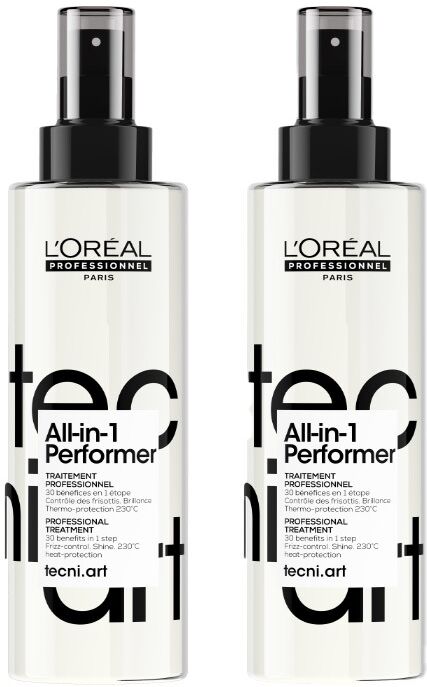
L'Oreal Professionnel Tecni.ART All in 1 Performer Multi-benefit SprayTecni.art All-in-1 Performer Styling Treatment by L'Oréal Professionnel is a professional leave-in treatment spray for 30 benefits in 1 step! Now available in this 2 x 190ml double pack, your hair will remain gorgeous for even longer. Benefits 1. Helps seal cuticles. 2. Helps prevent breakage. 3. Style refresher. 4. 24h style control*. 5. Enhances manageability. 6. Anti-frizz. 7. Anti-humidity. 8. Heat Protection upto 230°C/450°F**. 9. Easy blowdrying. 10. Smooths flyaways. 11. Anti-static. 12. Adds shine. 13. Detangles. 14. Conditions. 15. Hydrates. 16.nourishes. 17. Softens. 18. Smooths fiber. 19. Strengthens. 20. Reduces appearance of split ends. 21. Protects against external friction. 22. Silky touch. 23. Non-greasy finish. 24. No weigh down. 25. Fresh fragrance. 26. Easy to apply. 27. Enhances natural movement. 28. Helps preserve color vibrancy***. 29. Ideal cutting lotion. 30. Compatible with hot tools. *Consumer test on 53 subjects. **Instrumental test. ***Consumer test on 53 subjects after 4 weeks of use. Ingredients AQUA / WATER / EAU • COCOS NUCIFERA OIL / COCONUT OIL • AMODIMETHICONE • POLYQUATERNIUM-37 • PHENOXYETHANOL • PROPYLENE GLYCOL DICAPRYLATE/DICAPRATE • SODIUM HYDROXIDE • DIMETHICONE PEG-7 PHOSPHATE • PPG-1 TRIDECETH-6 • TRIDECETH-6 • BEHENTRIMONIUM CHLORIDE • XYLOSE • LACTIC ACID • ETHYLHEXYLGLYCERIN • ACRYLATES/STEARYL METHACRYLATE COPOLYMER • TETRAMETHYL ACETYLOCTAHYDRONAPHTHALENES • SORBITAN OLEATE • ISOPROPYL ALCOHOL • CETRIMONIUM CHLORIDE • HYDROLYZED VEGETABLE PROTEIN PG-PROPYL SILANETRIOL • BENZYL SALICYLATE • ALPHA-ISOMETHYL IONONE • CITRIC ACID • BENZYL ALCOHOL • HYDROXYCITRONELLAL • LINALOOL • GERANIOL • CITRAL • CARVONE • LIMONENE • EDTA • CITRONELLOL • COUMARIN • PINENE • BENZALDEHYDE • CANANGA ODORATA OIL/EXTRACT • ISOEUGENOL • POGOSTEMON CABLIN OIL • SODIUM BENZOATE • POTASSIUM SORBATE • TOCOPHEROL • PARFUM / FRAGRANCE32,00 £*Shipping: 0,00 £Secure redirect to the provider


-
Why do colors have different wavelengths?
Colors have different wavelengths because they are a result of different frequencies of light. The wavelength of light determines its color, with shorter wavelengths corresponding to colors like blue and violet, and longer wavelengths corresponding to colors like red and orange. When light interacts with an object, certain wavelengths are absorbed and others are reflected, which is what we perceive as color. Therefore, the different wavelengths of light are responsible for the variety of colors we see in the world around us. **
-
Why are the rings of an electron diffraction tube larger at higher wavelengths than at lower wavelengths?
The rings of an electron diffraction tube are larger at higher wavelengths than at lower wavelengths because the wavelength of the electrons is inversely proportional to their momentum. This means that as the wavelength increases, the momentum of the electrons decreases. With lower momentum, the electrons are less able to penetrate the atomic structure of the material being studied, resulting in larger diffraction rings. Conversely, at lower wavelengths, the higher momentum of the electrons allows them to penetrate the atomic structure more effectively, resulting in smaller diffraction rings. **
-
How do you calculate wavelengths in water?
To calculate the wavelength of a wave in water, you can use the formula: wavelength = speed of wave / frequency of wave. The speed of the wave in water can be calculated using the formula: speed = frequency * wavelength. The frequency of the wave can be determined by the source of the wave, and the wavelength can be measured by observing the distance between two consecutive wave crests or troughs. By using these formulas, you can calculate the wavelength of a wave in water. **
-
What is the reflection of adjacent wavelengths?
The reflection of adjacent wavelengths refers to the phenomenon where light waves of different wavelengths are reflected off a surface. When light waves with adjacent wavelengths, such as red and orange, hit a surface, they may be reflected at different angles or with different intensities. This can result in the separation of colors, as seen in a rainbow or in the iridescence of certain materials. The reflection of adjacent wavelengths is a key factor in the perception of color and the behavior of light. **


How can I play Life is Strange: Wavelengths?
To play Life is Strange: Wavelengths, you will need to have the base game Life is Strange: True Colors installed on your gaming platform. Wavelengths is a DLC (downloadable content) episode that focuses on the character Steph Gingrich. Once you have the base game, you can purchase and download the Wavelengths DLC from the respective digital store for your platform, such as Steam, PlayStation Store, or Xbox Store. After downloading the DLC, you can access and play Wavelengths from within the main menu of Life is Strange: True Colors. **
Do long or short wavelengths penetrate matter better?
Short wavelengths penetrate matter better than long wavelengths. This is because short wavelengths have higher energy and are able to penetrate through materials more easily. Long wavelengths, on the other hand, have lower energy and are more likely to be absorbed or scattered by the material, making them less effective at penetrating through matter. This is why X-rays, which have short wavelengths, are used for medical imaging to penetrate through the body and create detailed images of bones and tissues. **
Top-Angebote
Products related to Wavelengths:
-
Retailers Go Blue & Red Light Therapy Device 5 Wavelengths For Acne, Pain Relief & Skin Rejuvenation Blue & Red Light Therapy Device 5 Wavelengths For Acne, Pain Relief & Skin RejuvenationTransform Your Skin & Soothe Aches with Advanced Light TherapyExperience the power of professionalgrade Blue & Red Light Therapy Device with 5 Wavelengths, designed to enhance skin health, reduce acne, and relieve muscle pain. Harnessing Infrared...59,97 $*Shipping: 0,00 $Secure redirect to the provider
-
Uplift Essentials Blue And Red Light Therapy Device With 5 Wavelengths Near Infrared For Pain Relief And Skin Health Blue And Red Light Therapy Device With 5 Wavelengths Near Infrared For Pain Relief And Skin HealthExperience advanced red and blue light therapy at home with this 5wavelength device designed to support pain relief, improve skin clarity, and enhance overall wellness. Combining visible and invisible light, it penetrates deeply into the skin and...106,97 $*Shipping: 0,00 $Secure redirect to the provider
-
Fender American Performer Tele Original - RefurbishedThis American Performer Telecaster, finished in its distinctive Penny color, combines vintage soul with modern reliability. Built in the USA, it features an alder body for balanced resonance, a maple neck and fingerboard for snap and clarity, and Fender's Yosemite pickups for a versatile tonal range. The Greasebucket tone system preserves articulation as you shape your sound, while jumbo frets and the modern neck profile ensure comfort during long sessions. A true performer's Tele, ready for stage or studio.1078,92 £*Shipping: 0,00 £Secure redirect to the provider
-
How can one filter wavelengths?
One can filter wavelengths by using materials that selectively absorb or transmit certain wavelengths of light. For example, colored filters can be used to absorb specific wavelengths of light while allowing others to pass through. Additionally, interference filters can be used to selectively transmit certain wavelengths by exploiting the wave nature of light. These filters are made by depositing thin layers of materials with specific optical properties onto a substrate. By carefully designing the thickness and composition of these layers, interference filters can be engineered to transmit only the desired wavelengths of light. **
-
How can wavelengths be filtered?
Wavelengths can be filtered using various optical filters such as bandpass filters, longpass filters, and shortpass filters. These filters work by selectively transmitting or blocking certain wavelengths of light while allowing others to pass through. Bandpass filters only allow a specific range of wavelengths to pass through, while longpass filters transmit longer wavelengths and shortpass filters transmit shorter wavelengths. By using these filters, specific wavelengths of light can be isolated or removed from a light source. **
-
Why do colors have different wavelengths?
Colors have different wavelengths because they are a result of different frequencies of light. The wavelength of light determines its color, with shorter wavelengths corresponding to colors like blue and violet, and longer wavelengths corresponding to colors like red and orange. When light interacts with an object, certain wavelengths are absorbed and others are reflected, which is what we perceive as color. Therefore, the different wavelengths of light are responsible for the variety of colors we see in the world around us. **
-
Why are the rings of an electron diffraction tube larger at higher wavelengths than at lower wavelengths?
The rings of an electron diffraction tube are larger at higher wavelengths than at lower wavelengths because the wavelength of the electrons is inversely proportional to their momentum. This means that as the wavelength increases, the momentum of the electrons decreases. With lower momentum, the electrons are less able to penetrate the atomic structure of the material being studied, resulting in larger diffraction rings. Conversely, at lower wavelengths, the higher momentum of the electrons allows them to penetrate the atomic structure more effectively, resulting in smaller diffraction rings. **
Similar search terms for Wavelengths
-
Air Vent Peak Performer I Rolled Ridge VentThe Air Vent Peak Performer I Rolled Ridge Vent 28 Foot delivers powerful and consistent roof exhaust ventilation across the entire ridge line. Made from durable polypropylene this unfiltered peak roof vent is designed to withstand harsh weather...89,17 $*Shipping: 0,00 $Secure redirect to the provider
-
L'Oreal Professionnel Tecni.ART All in 1 Performer Multi-benefit SprayTecni.art All-in-1 Performer Styling Treatment by L'Oréal Professionnel is a professional leave-in treatment spray for 30 benefits in 1 step! Now available in this 2 x 190ml double pack, your hair will remain gorgeous for even longer. Benefits 1. Helps seal cuticles. 2. Helps prevent breakage. 3. Style refresher. 4. 24h style control*. 5. Enhances manageability. 6. Anti-frizz. 7. Anti-humidity. 8. Heat Protection upto 230°C/450°F**. 9. Easy blowdrying. 10. Smooths flyaways. 11. Anti-static. 12. Adds shine. 13. Detangles. 14. Conditions. 15. Hydrates. 16.nourishes. 17. Softens. 18. Smooths fiber. 19. Strengthens. 20. Reduces appearance of split ends. 21. Protects against external friction. 22. Silky touch. 23. Non-greasy finish. 24. No weigh down. 25. Fresh fragrance. 26. Easy to apply. 27. Enhances natural movement. 28. Helps preserve color vibrancy***. 29. Ideal cutting lotion. 30. Compatible with hot tools. *Consumer test on 53 subjects. **Instrumental test. ***Consumer test on 53 subjects after 4 weeks of use. Ingredients AQUA / WATER / EAU • COCOS NUCIFERA OIL / COCONUT OIL • AMODIMETHICONE • POLYQUATERNIUM-37 • PHENOXYETHANOL • PROPYLENE GLYCOL DICAPRYLATE/DICAPRATE • SODIUM HYDROXIDE • DIMETHICONE PEG-7 PHOSPHATE • PPG-1 TRIDECETH-6 • TRIDECETH-6 • BEHENTRIMONIUM CHLORIDE • XYLOSE • LACTIC ACID • ETHYLHEXYLGLYCERIN • ACRYLATES/STEARYL METHACRYLATE COPOLYMER • TETRAMETHYL ACETYLOCTAHYDRONAPHTHALENES • SORBITAN OLEATE • ISOPROPYL ALCOHOL • CETRIMONIUM CHLORIDE • HYDROLYZED VEGETABLE PROTEIN PG-PROPYL SILANETRIOL • BENZYL SALICYLATE • ALPHA-ISOMETHYL IONONE • CITRIC ACID • BENZYL ALCOHOL • HYDROXYCITRONELLAL • LINALOOL • GERANIOL • CITRAL • CARVONE • LIMONENE • EDTA • CITRONELLOL • COUMARIN • PINENE • BENZALDEHYDE • CANANGA ODORATA OIL/EXTRACT • ISOEUGENOL • POGOSTEMON CABLIN OIL • SODIUM BENZOATE • POTASSIUM SORBATE • TOCOPHEROL • PARFUM / FRAGRANCE32,00 £*Shipping: 0,00 £Secure redirect to the provider
-
Singer Sewing MachineThe SINGER® M2100 sewing machine is great for the beginner and powerful enough for an expert. For your convenience, your machine will arrive pre-threaded. Accessories included are located in the storage area at the front of your machine.129,99 $*Shipping: 0,00 $Secure redirect to the provider
-
Women's Performer Nitro Paddock Boots in Black, Size: 6 B / Medium by AriatTreat your feet to all-day comfort with the Performer Nitro Paddock. Top-of-the-line Nitro technology creates a boot with unmatched flexibility, stability, and comfortPerformer Nitro Paddock Boot Women's Performer Nitro Paddock Boots in Black, Size: 6 B Medium by Ariat167,99 $*Shipping: 0,00 $Secure redirect to the provider
-
How do you calculate wavelengths in water?
To calculate the wavelength of a wave in water, you can use the formula: wavelength = speed of wave / frequency of wave. The speed of the wave in water can be calculated using the formula: speed = frequency * wavelength. The frequency of the wave can be determined by the source of the wave, and the wavelength can be measured by observing the distance between two consecutive wave crests or troughs. By using these formulas, you can calculate the wavelength of a wave in water. **
-
What is the reflection of adjacent wavelengths?
The reflection of adjacent wavelengths refers to the phenomenon where light waves of different wavelengths are reflected off a surface. When light waves with adjacent wavelengths, such as red and orange, hit a surface, they may be reflected at different angles or with different intensities. This can result in the separation of colors, as seen in a rainbow or in the iridescence of certain materials. The reflection of adjacent wavelengths is a key factor in the perception of color and the behavior of light. **
-
How can I play Life is Strange: Wavelengths?
To play Life is Strange: Wavelengths, you will need to have the base game Life is Strange: True Colors installed on your gaming platform. Wavelengths is a DLC (downloadable content) episode that focuses on the character Steph Gingrich. Once you have the base game, you can purchase and download the Wavelengths DLC from the respective digital store for your platform, such as Steam, PlayStation Store, or Xbox Store. After downloading the DLC, you can access and play Wavelengths from within the main menu of Life is Strange: True Colors. **
-
Do long or short wavelengths penetrate matter better?
Short wavelengths penetrate matter better than long wavelengths. This is because short wavelengths have higher energy and are able to penetrate through materials more easily. Long wavelengths, on the other hand, have lower energy and are more likely to be absorbed or scattered by the material, making them less effective at penetrating through matter. This is why X-rays, which have short wavelengths, are used for medical imaging to penetrate through the body and create detailed images of bones and tissues. **
* All prices are inclusive of VAT and, if applicable, plus shipping costs. The offer information is based on the details provided by the respective shop and is updated through automated processes. Real-time updates do not occur, so deviations can occur in individual cases. ** Note: Parts of this content were created by AI.